
Starting
therapy can feel like a big step—especially if you've never spoken to a mental
health professional before. Many people considering anxiety therapy often
wonder:
"Will I have to
share everything?"
"What if I get emotional?"
"Will the therapist judge me?"
If
these thoughts sound familiar, you're not alone.
The
good news is that your first therapy session is usually much simpler and more
comfortable than most people imagine. It's not a test, and there are no right
or wrong answers. Think of it as the beginning of a conversation focused
entirely on you and your well-being.
Before
the Session: It's Normal to Feel Nervous
Whether
you're attending therapy online or meeting a therapist in person, feeling a
little anxious beforehand is completely normal.
Many
people worry about what to say or where to start. But remember—you don't need
to prepare a speech or have everything figured out. Your therapist is there to
guide the conversation.
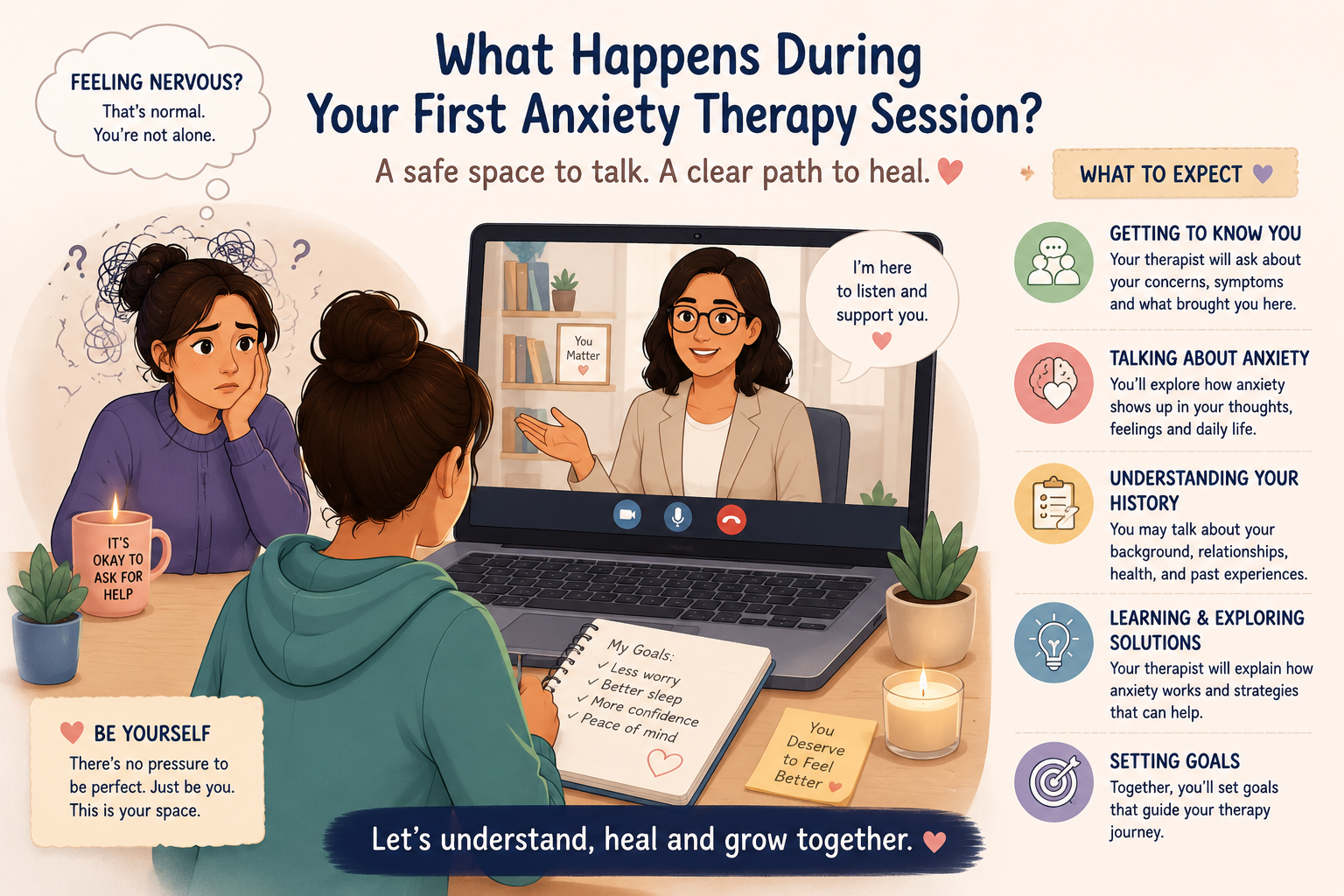
Getting
to Know You
The
first session is mainly about understanding who you are and what brings you to
therapy.
Your
therapist may ask questions such as:
- What made you decide to seek help
now?
- What symptoms have you been
experiencing?
- How long have you been feeling this
way?
- How is anxiety affecting your daily
life?
- What are your goals for therapy?
You
can share as much or as little as you feel comfortable sharing. There is no
pressure to discuss anything you're not ready for.
Talking
About Your Anxiety
Everyone
experiences anxiety differently.
Some
people struggle with constant worry and overthinking. Others experience panic
attacks, social anxiety, sleep difficulties, or physical symptoms such as a
racing heart or tightness in the chest.
During
the session, your therapist will try to understand how anxiety shows up in your
life. This helps them create a treatment plan that fits your unique needs.
Understanding
Your History
Your
therapist may ask about different areas of your life, including:
- Family and relationships
- Work or academic stress
- Major life events
- Physical health
- Previous experiences with therapy
Don't
worry—you won't be expected to remember every detail. These questions simply
help your therapist understand the bigger picture.
Learning
How Therapy Can Help
One
of the most important parts of the first session is discussing how anxiety
therapy works.
Your
therapist may explain:
- Why anxiety develops
- Common anxiety triggers
- How thoughts, emotions, and behaviors
are connected
- Techniques that can help manage
anxiety
Many
people feel relieved after learning that their experiences are common and
treatable.
Setting
Goals Together
Therapy
works best when you have a clear direction.
Your
therapist may ask:
- What would you like to change?
- What does feeling better look like
for you?
- What challenges would you like help
with?
Your
goals might be reducing overthinking, improving sleep, managing panic attacks,
feeling more confident, or simply feeling calmer day-to-day.
What
If You Get Emotional?
It's
okay.
Many
people cry during therapy, while others feel nervous, quiet, or unsure of what
to say. All of these reactions are completely normal.
Therapy
is designed to be a safe and judgment-free space where you can express yourself
honestly.
Online
Therapy: Just as Effective
If
you're choosing therapy online, the process is very similar to an in-person
session.
You'll
meet your therapist through a secure video platform and have the same
opportunity to discuss your concerns, ask questions, and receive professional
support—all from the comfort of your home.
For
many people, online therapy feels more convenient and less intimidating, making
it easier to take the first step.
The
First Step Is Often the Hardest
Many
people spend months—or even years—thinking about therapy before finally
reaching out. Yet after their first session, they often say the same thing:
"I
wish I had done this sooner."
If
anxiety has been affecting your peace of mind, relationships, work, or daily
life, seeking support can be a powerful act of self-care.
At
The Mind Veda, we provide compassionate, evidence-based anxiety therapy and
therapy online options to help you understand your emotions, develop healthier
coping strategies, and move toward a calmer, more balanced life.
Remember:
You don't have to have everything figured out before starting therapy. You just
have to take the first step.