Do you constantly feel
tense, restless, or overwhelmed by everyday situations? If yes, you're not
alone.
Anxiety is one of the
most common mental health issues people face today. While feeling anxious
before an exam, interview, or important event is normal, ongoing anxiety that
affects your daily life may be a sign that you need professional support.
Let's explore some common
signs that anxiety may be taking a larger role in your life than it should.
1. You Overthink
Everything
Do you replay
conversations in your head for hours? Do you constantly wonder if you said the
wrong thing or made a mistake?
Overthinking can make
even simple decisions feel exhausting. If your mind rarely gets a break,
anxiety could be the reason.
2. You Always Expect the
Worst
When your phone rings
unexpectedly, do you immediately assume something bad has happened? Do you
often imagine negative outcomes before anything has even occurred?
This constant
anticipation of danger is a common sign of anxiety.
3. You Struggle to Relax
Even when you have free
time, does your mind keep racing?
Many people with anxiety
find it difficult to truly relax because their brain remains on "high
alert" mode, scanning for problems that may not even exist.
4. Small Problems Feel
Huge
A minor disagreement, a
delayed email, or a small mistake at work can sometimes feel like a major
crisis.
When anxiety is high,
everyday challenges can feel much bigger and more threatening than they really
are.
5. Your Sleep Is Affected
Do you struggle to fall
asleep because your mind won't stop thinking? Or do you wake up feeling worried
about the day ahead?
Anxiety and sleep
problems often go hand in hand, creating a cycle that can leave you feeling
drained and irritable.
6. You Constantly Seek
Reassurance
Do you frequently ask
others if everything is okay? Do you need repeated confirmation that you've
made the right decision?
While seeking support is
normal, excessive reassurance-seeking can be a sign that anxiety is controlling
your thoughts.
7. Physical Symptoms Are
Becoming Common
Anxiety doesn't only
affect the mind—it can affect the body too.
You may experience
headaches, muscle tension, stomach discomfort, rapid heartbeat, sweating, or a
feeling of tightness in your chest, even when there is no medical cause.
8. You Avoid Certain
Situations
Do you avoid social
gatherings, important conversations, presentations, or new experiences because
they make you feel anxious?
Avoidance may provide
temporary relief, but it often makes anxiety stronger over time.
9. You Feel Constantly
Exhausted
Living with anxiety can
be mentally and physically draining. Constant worrying requires energy, and
many people with anxiety feel tired even after getting enough rest.
10. Anxiety Is Affecting
Your Relationships, Work, or Daily Life
This is perhaps the most
important sign.
If anxiety is making it
difficult to focus at work, enjoy time with loved ones, make decisions, or feel
present in your daily life, it may be time to seek professional help.
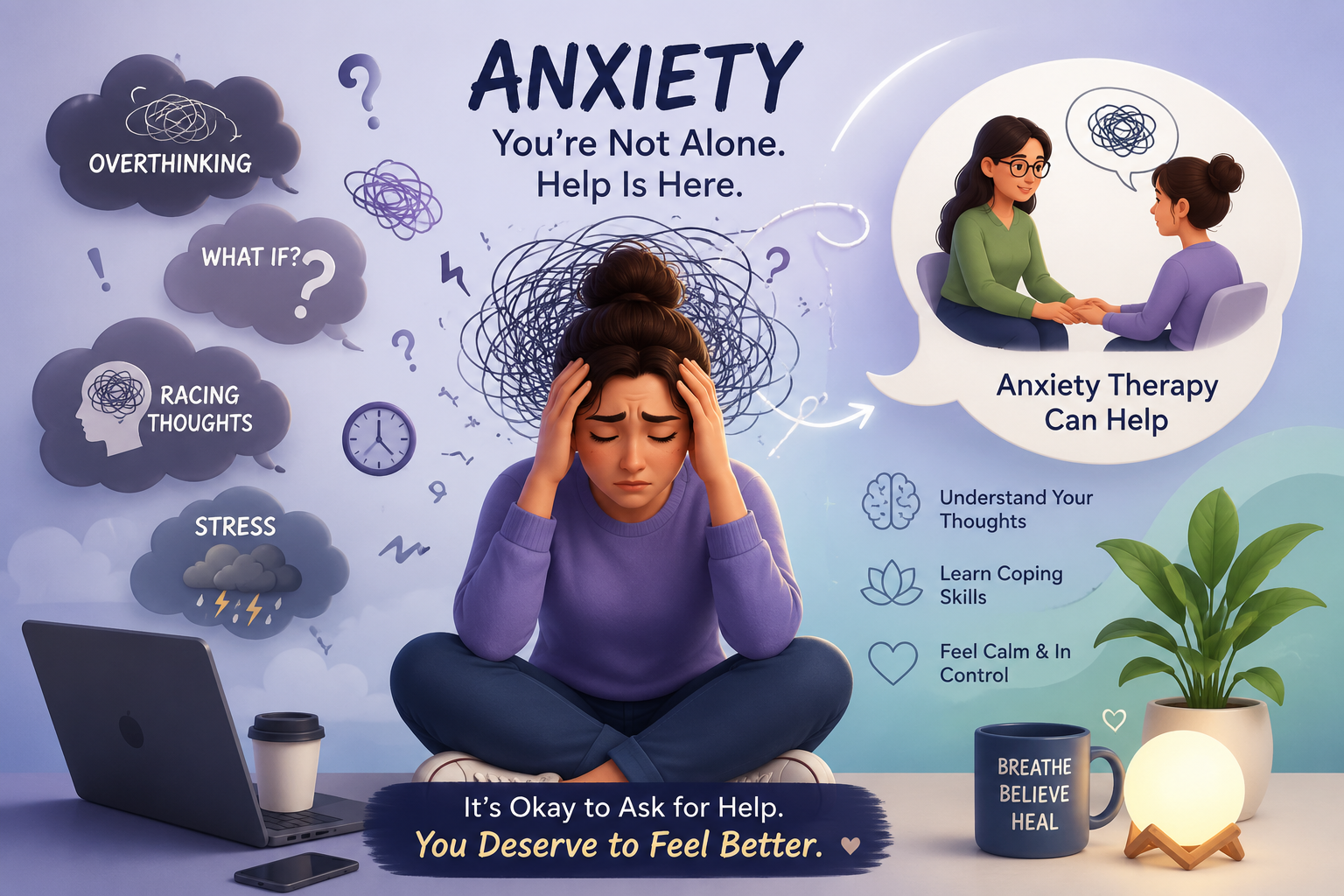
How Anxiety Therapy Can
Help
Many people wait until
anxiety becomes unbearable before reaching out for support. However, anxiety
therapy can help you understand your triggers, manage overwhelming thoughts,
develop healthier coping skills, and regain a sense of control.
Therapy is not about
"getting rid" of anxiety completely. It is about learning how to
respond to anxiety in a healthier and more balanced way.
An experienced therapist
can help you identify patterns that may be keeping your anxiety alive and teach
practical techniques to reduce its impact on your life.
You Don't Have to Manage
It Alone
If you often find
yourself searching for an "anxiety therapist near me" or wondering
why you feel anxious all the time, it may be your mind's way of telling you
that support could be helpful.
At The Mind Veda, we
understand that anxiety can feel overwhelming, confusing, and exhausting. Our
team of psychologists provides a safe, non-judgmental space where you can
explore your concerns, understand your emotions, and learn tools to improve
your well-being.
Remember, asking for help
is not a sign of weakness. It's a step toward understanding yourself better and
living a calmer, healthier life.